Shelter for Mental Noise
A semi-buried sensory refuge designed to reduce cognitive overload through terrain protection, spatial filtering and visual silence.
Human State: Mental Noise
Typology: Semi-Buried Sensory Refuge
Spatial Response: Sensory Filtering / Terrain Protection
Methodology: Neuro Emotional Immersion
Author: Lucía Silva / LS•STUDIO
01 · Project Statement
Shelter for Mental Noise is the first capsule of the NEI Capsule Series, a spatial research system by LS•STUDIO exploring how architecture can respond to specific human states through form, light, matter, terrain and spatial sequence.
This capsule addresses mental noise: the accumulation of visual stimulation, fragmented attention and cognitive saturation that prevents the body from finding pause. Rather than proposing escape, the project translates this condition into architecture as a sequence of reduction.
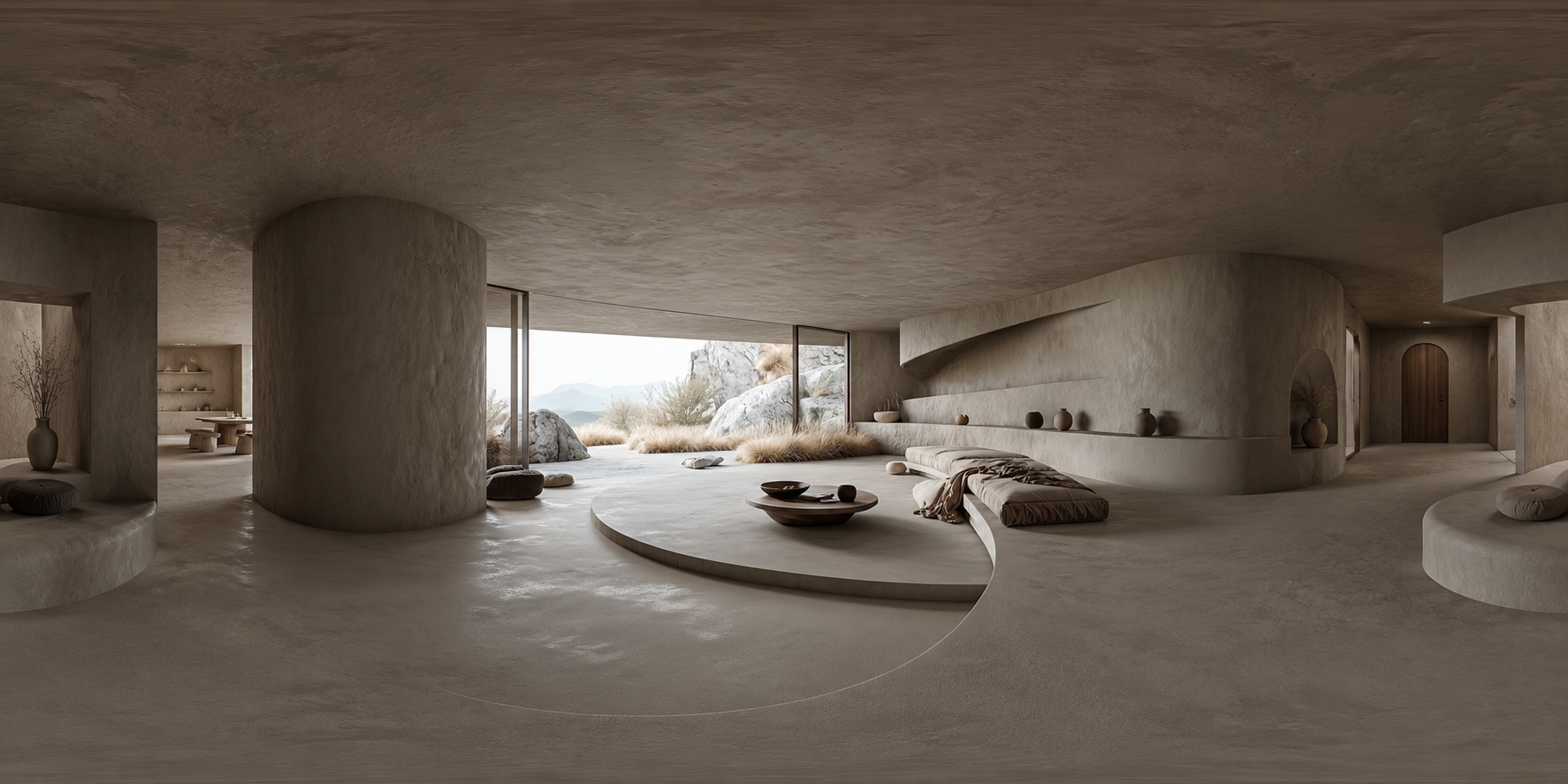
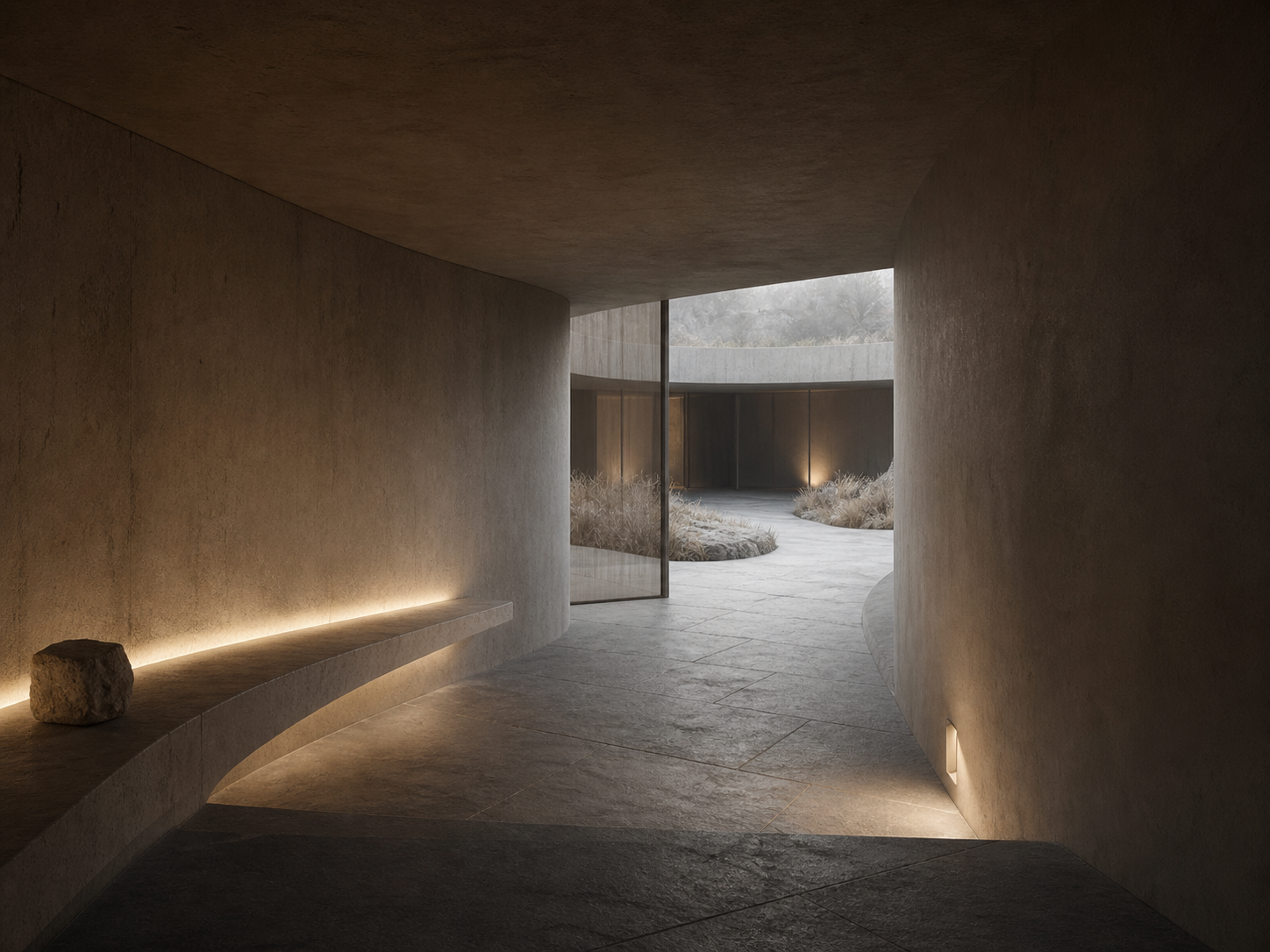
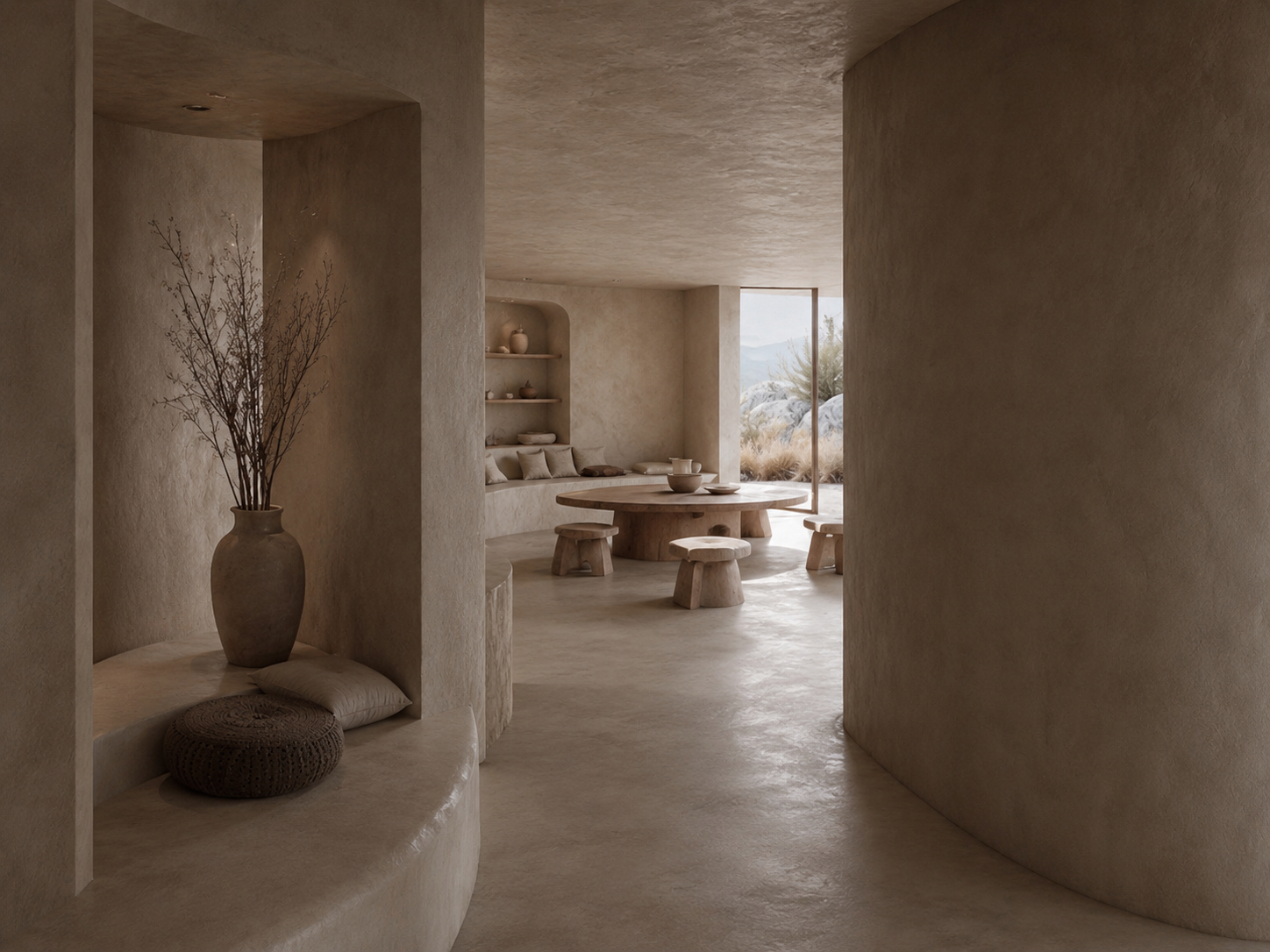
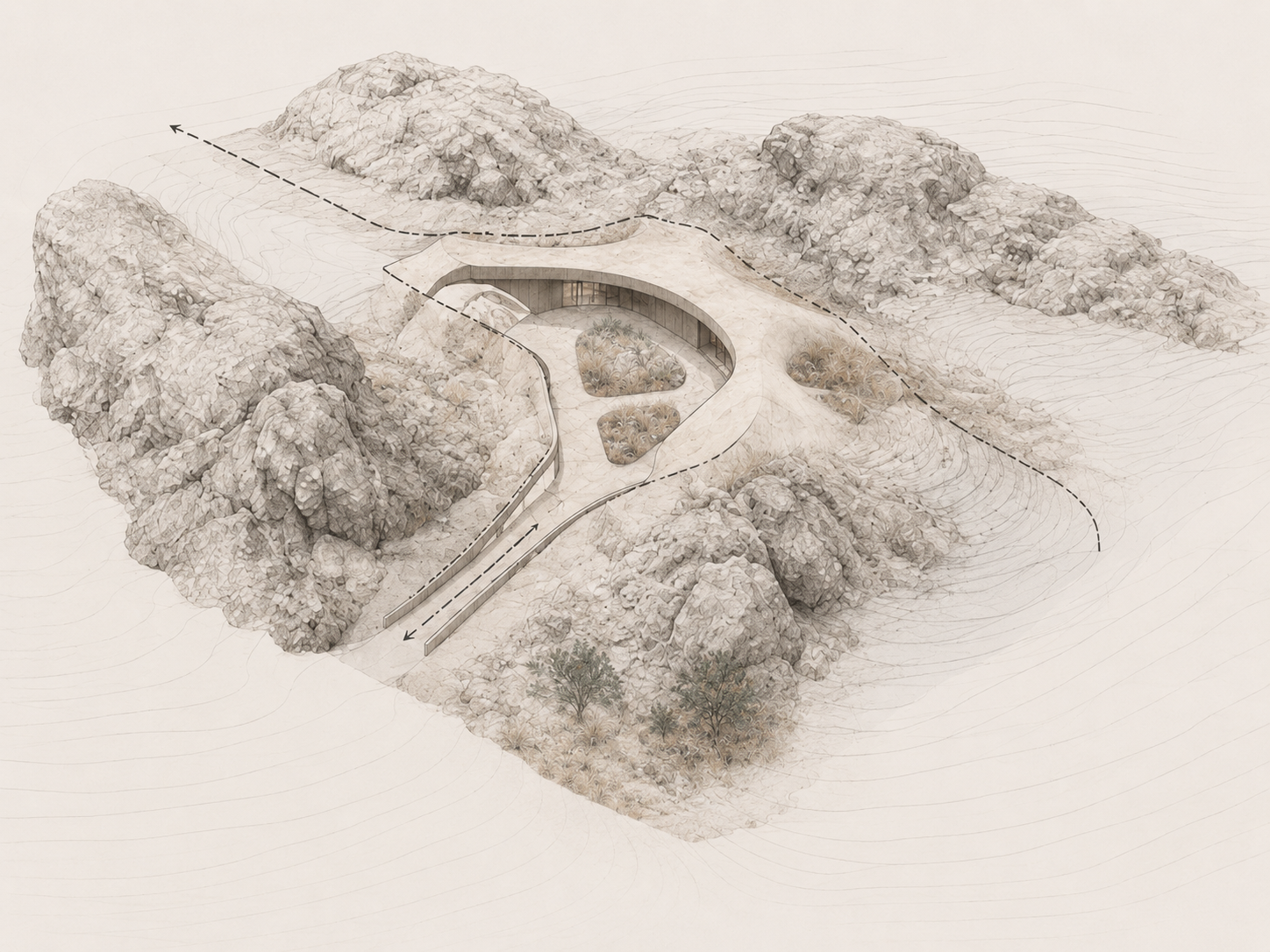
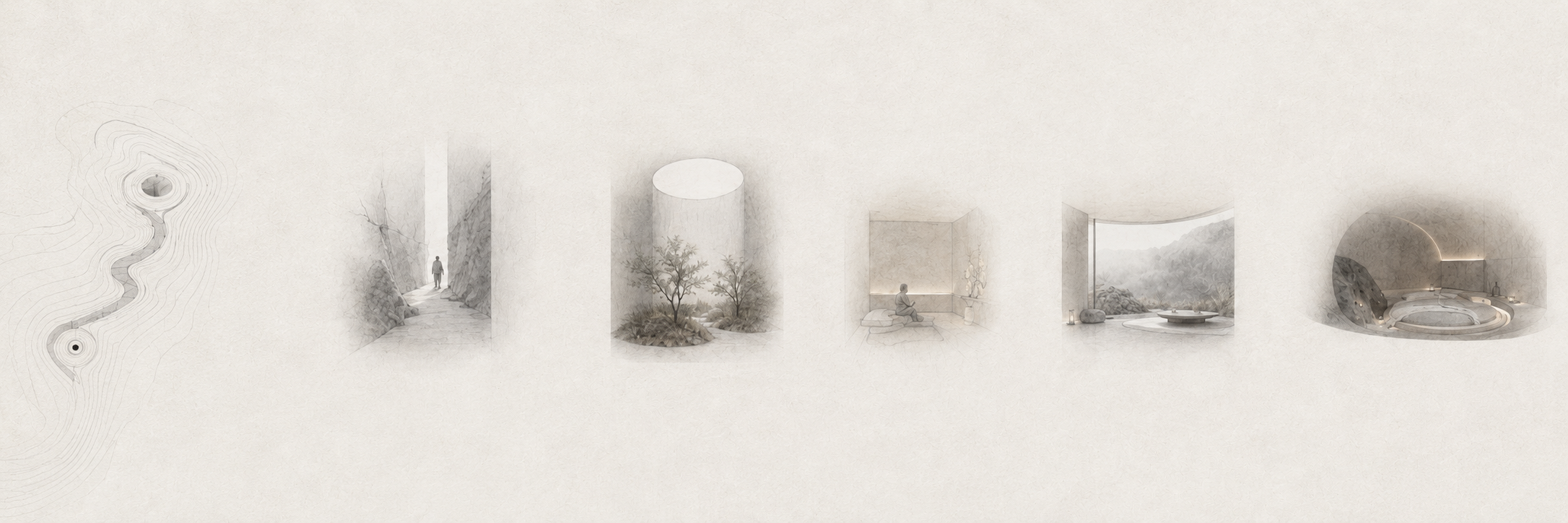
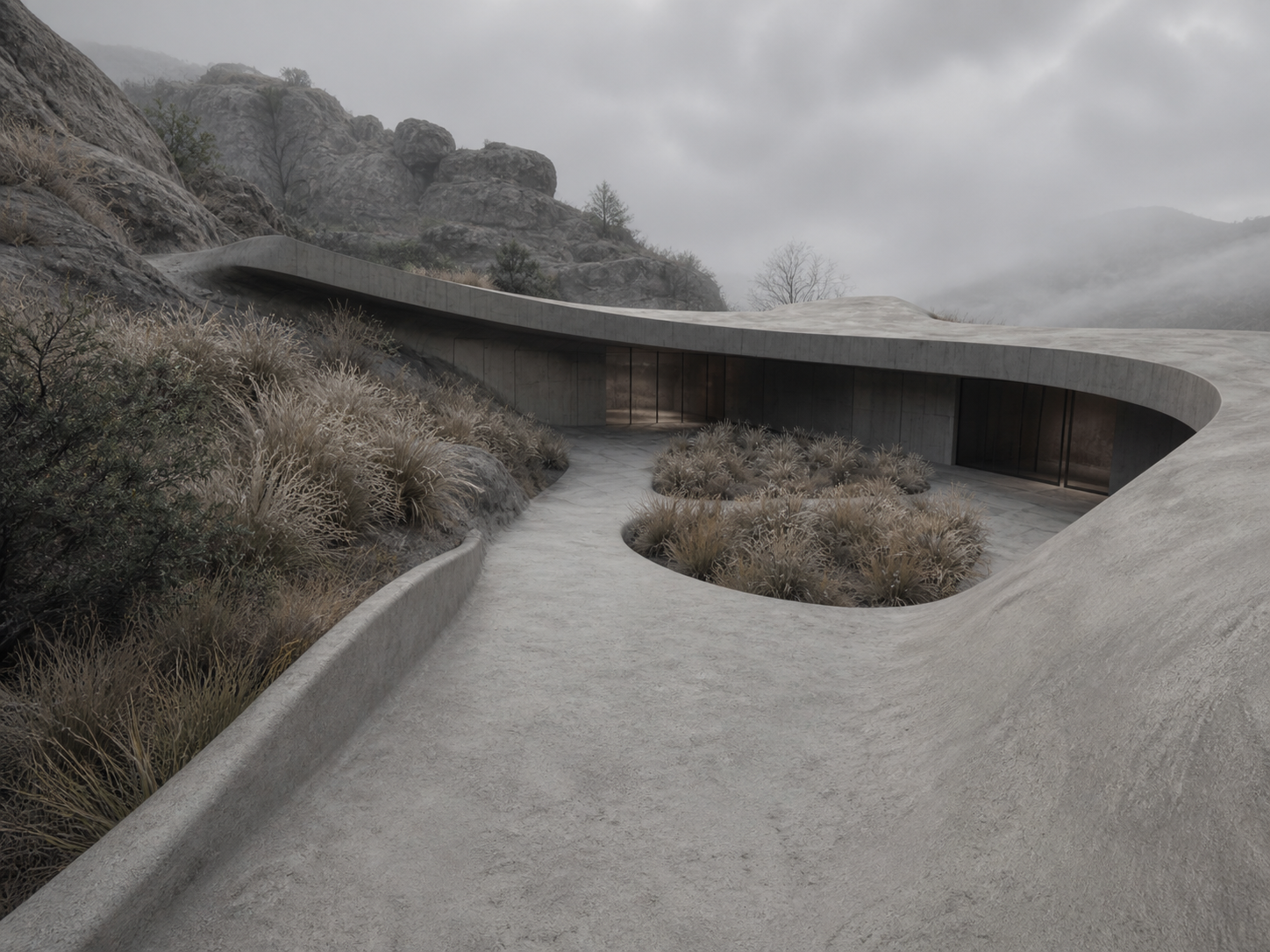
Set partially within rocky terrain, the refuge uses earth, mass and shadow as regulatory tools. The body moves through a recessed approach, a thickened threshold, a compressed passage and a protected interior field where light is filtered, visual information is reduced and orientation can return.
The project does not remove the body from the world. It edits the world around the body.
Human State
Mental noise is not only psychological. It is spatial.
It appears when attention becomes fragmented by excess information, visual interruption and continuous sensory demand. The body remains present, but perception becomes dispersed. Light, sound, movement and visual information arrive without hierarchy. The nervous system stays alert, even in stillness.
Shelter for Mental Noise begins with that condition. It treats cognitive overload as an architectural problem: too much exposure, too little filtering, too few thresholds and no clear place for the body to reorient.

Spatial Question
How can architecture reduce cognitive overload without isolating the body completely from the world?
The capsule does not seek total disconnection. It explores a more precise condition: partial withdrawal. A spatial state where the body remains connected to light, air, terrain and time, while unnecessary sensory information is filtered out.
The project asks whether refuge can be created through reduction rather than escape. Its answer is architectural: terrain becomes protection, threshold becomes transition, compression slows perception and filtered light restores orientation without overstimulating the eye.
Architectural System Section
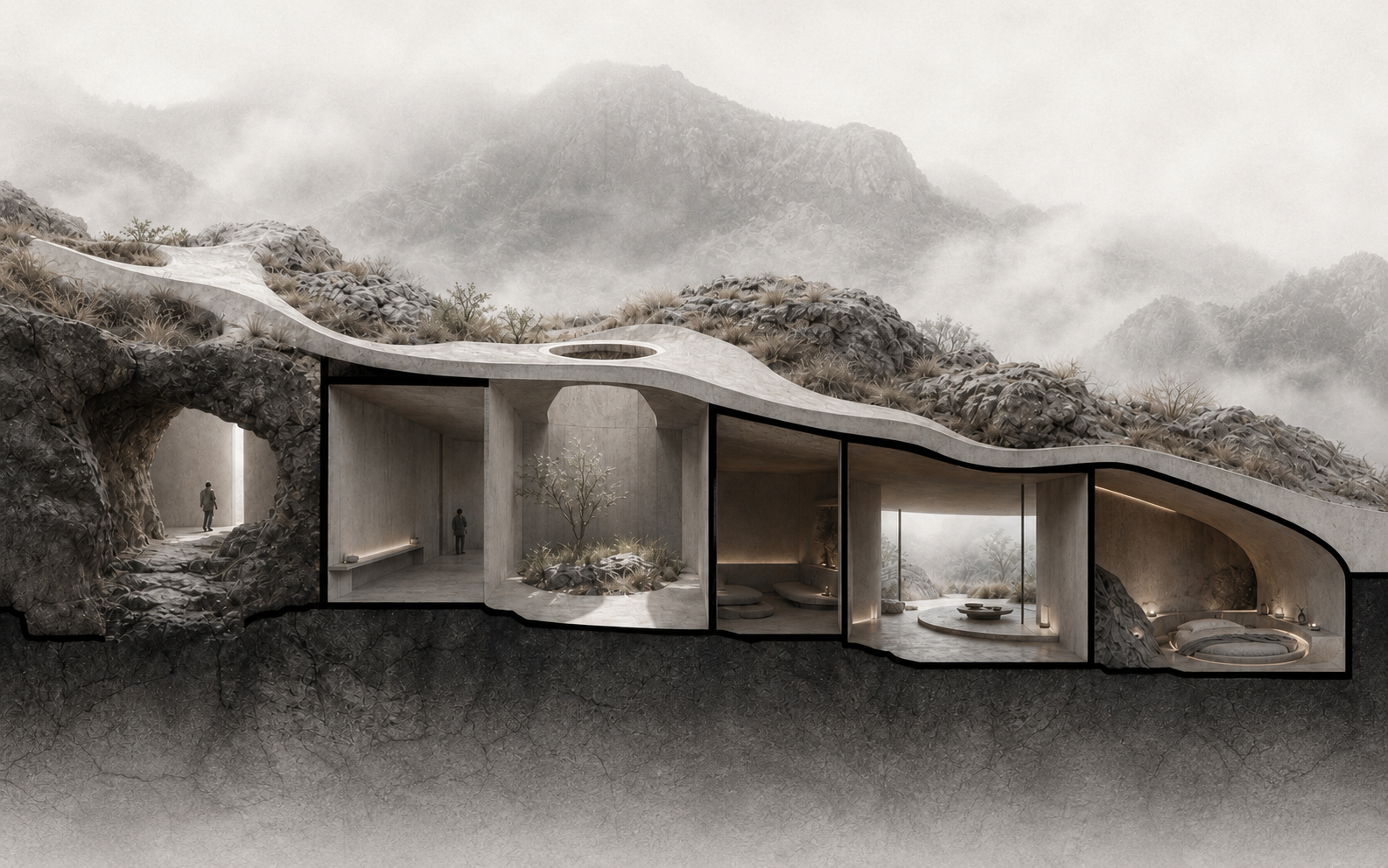
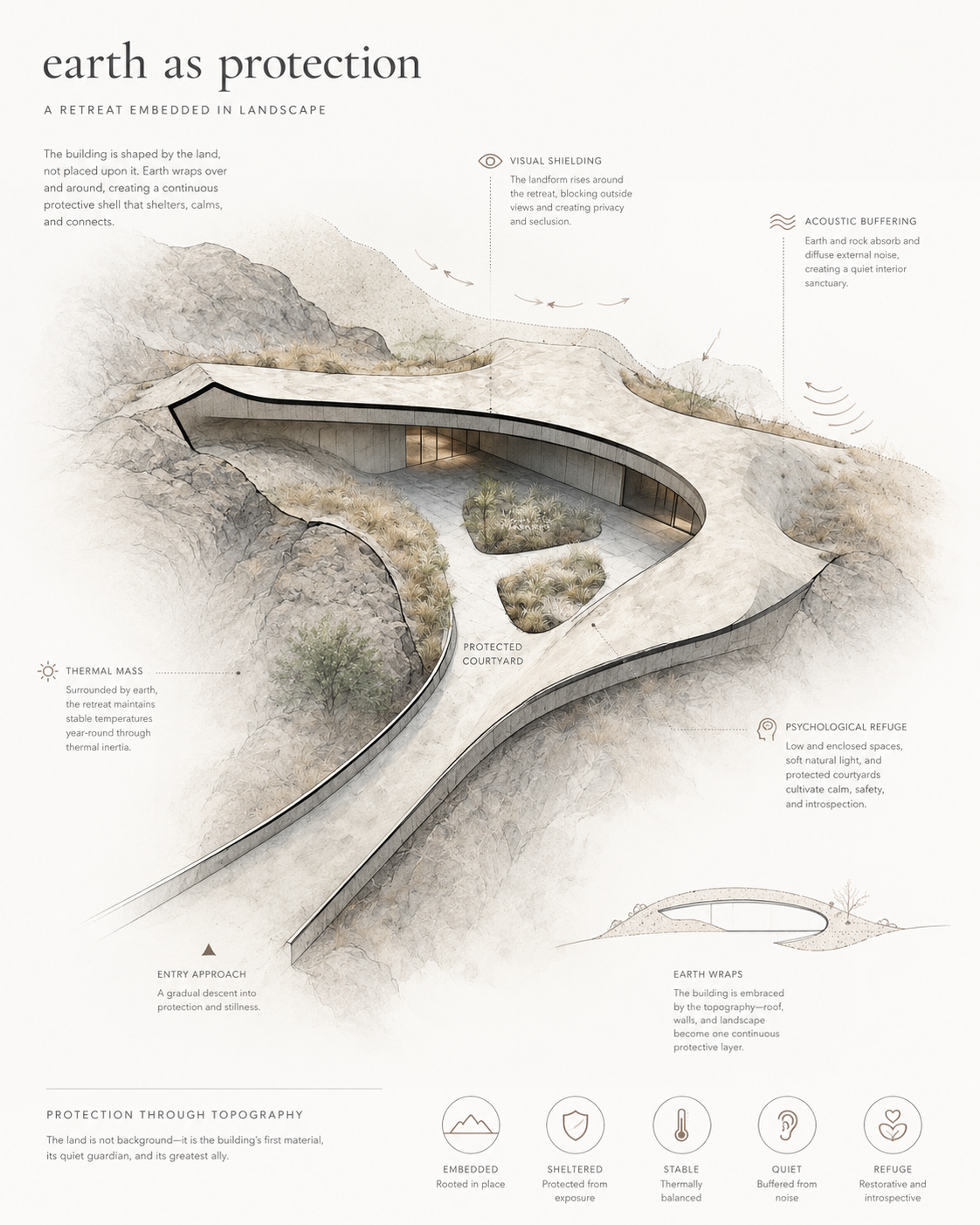
Shelter for Mental Noise is organized as a semi-buried spatial filter. Its architecture is not defined by a single room, but by a sequence of thresholds that gradually reduce exposure.
The plan is arranged around a protected courtyard. The route does not reveal the refuge immediately. Instead, the body descends through a recessed approach, enters a thickened threshold, moves through a compressed passage and arrives at a quieter interior field.
The section carries the main idea of the project. The roof becomes terrain. The ground wraps the architecture. The interior is held between earth, shadow and filtered light. This semi-buried condition reduces visual demand while preserving a controlled relationship to sky, air and landscape.
Earth / Light / Semi-burial Section
The capsule is embedded in terrain because mental noise is treated as a condition of overexposure. Earth becomes the first filter. It limits peripheral information, softens exterior intensity and gives the body a stable spatial edge.
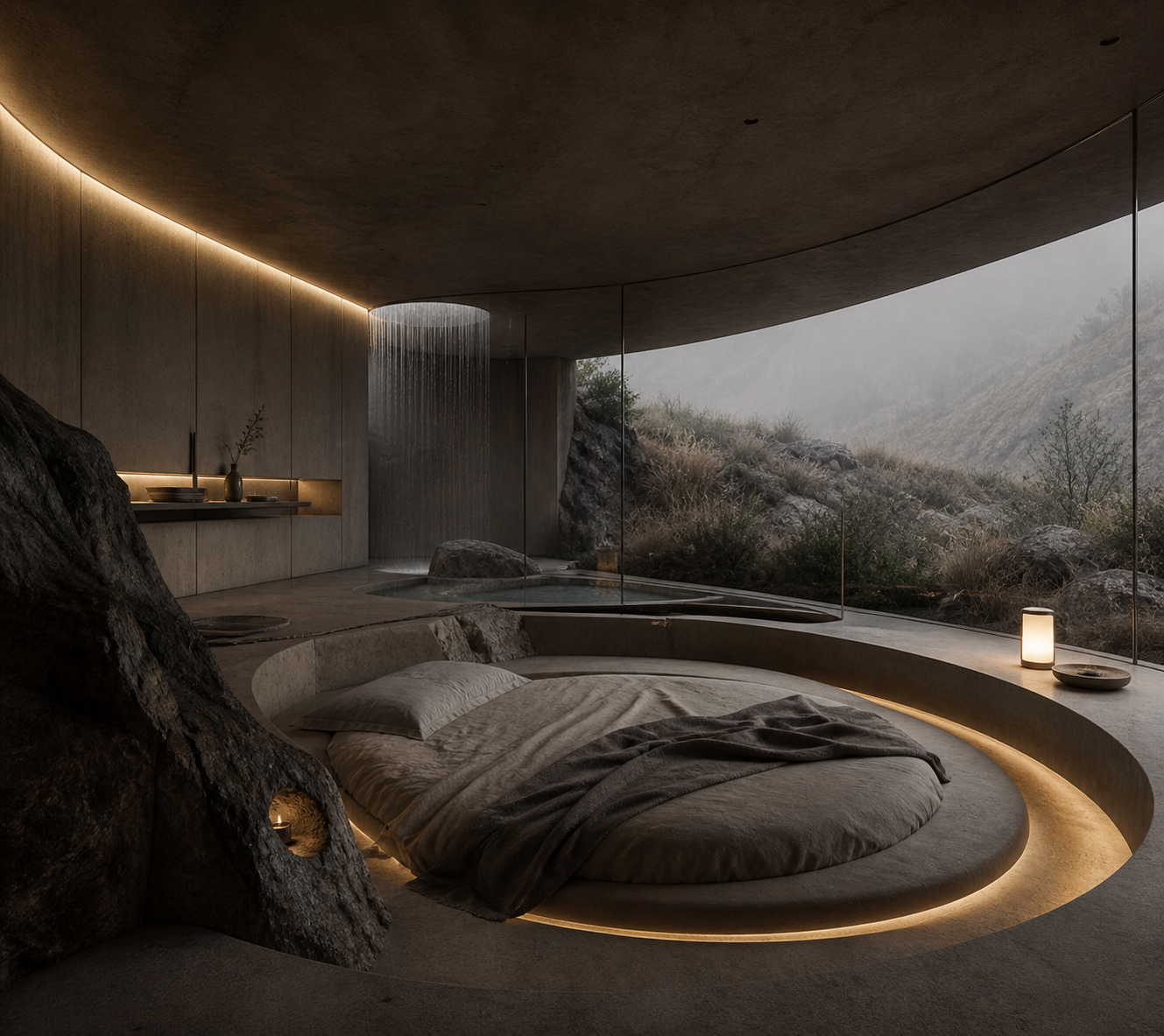
Light enters only after being mediated. It descends through courtyards, slips under the roof edge and moves across mineral surfaces without flooding the interior. The goal is not darkness, but controlled visibility.
Semi-burial creates a specific refuge condition: protected without being sealed, connected without being exposed.
Three System Statements
Earth
Terrain rises around the body, reducing exposure and holding the architecture in place.
Light
Daylight is filtered through protected voids and controlled apertures.
Semi-Burial
The architectural body is partially inserted into the ground, creating containment without complete closure.