
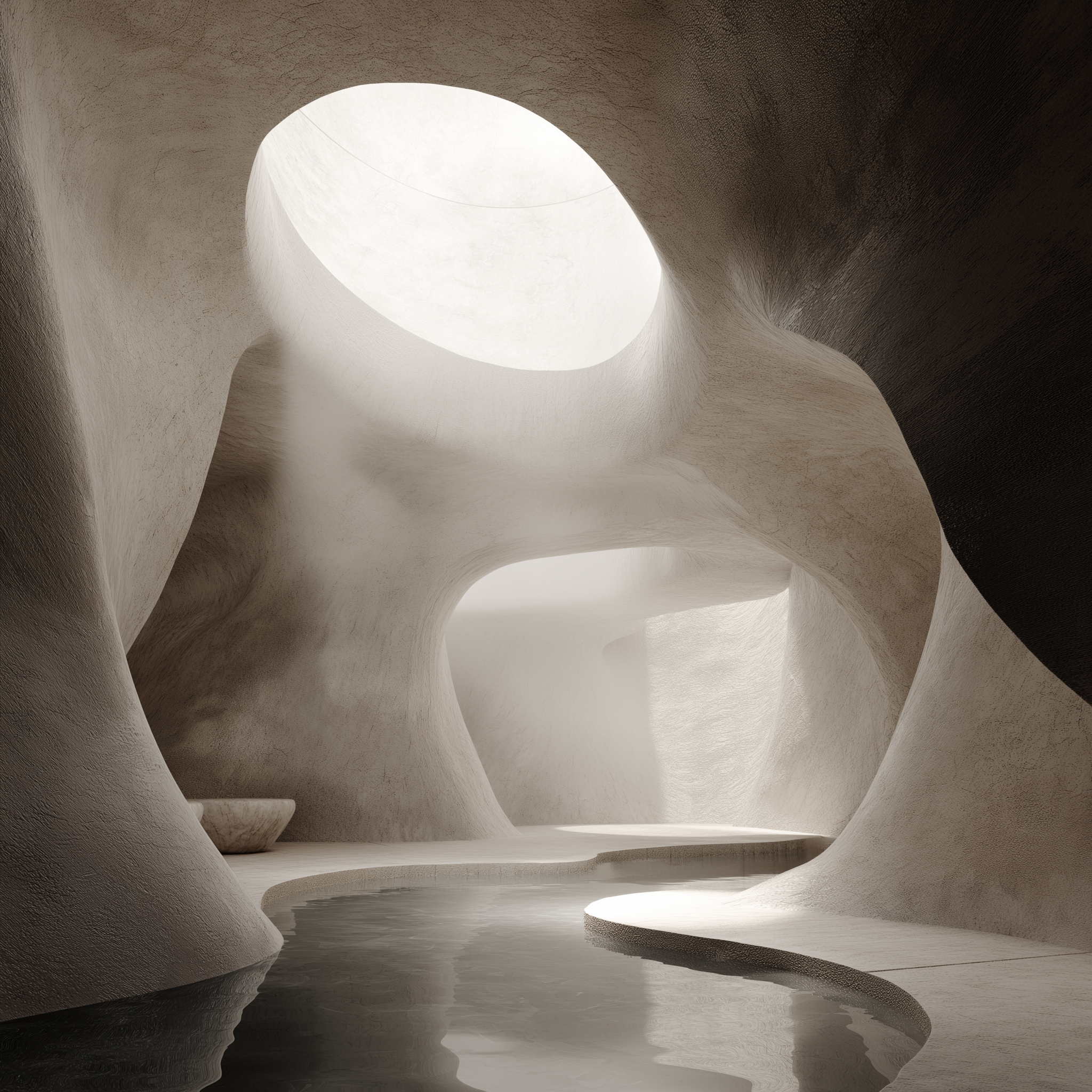
NEI — Neuro Emotional Immersion
A neuro-spatial design methodology for emotional regulation.
NEI is a design method created by Lucía Silva Studio to develop physical and digital spaces that do more than look beautiful: they regulate, protect and transform the way the body feels inside architecture.
It is based on one idea: space is not neutral.
Light, scale, rhythm, texture, sound, threshold and material presence influence attention, emotion and nervous system response.
NEI designs from that invisible layer.
WHAT IS NEI?
NEI — Neuro Emotional Immersion is a methodology for creating emotionally intelligent spaces.
It combines neuroarchitecture, environmental psychology, sensory design, symbolic narrative and immersive technology to design environments that support calm, clarity, introspection and emotional reconnection.
NEI can be applied to:
physical architecture
digital architecture
immersive VR experiences
brand spaces
well-being environments
hospitality, retreat and healthcare concepts
spatial research and speculative design
NEI is not decoration.
It is not a visual style.
It is a way of designing spatial conditions that influence how a person breathes, moves, perceives and feels.
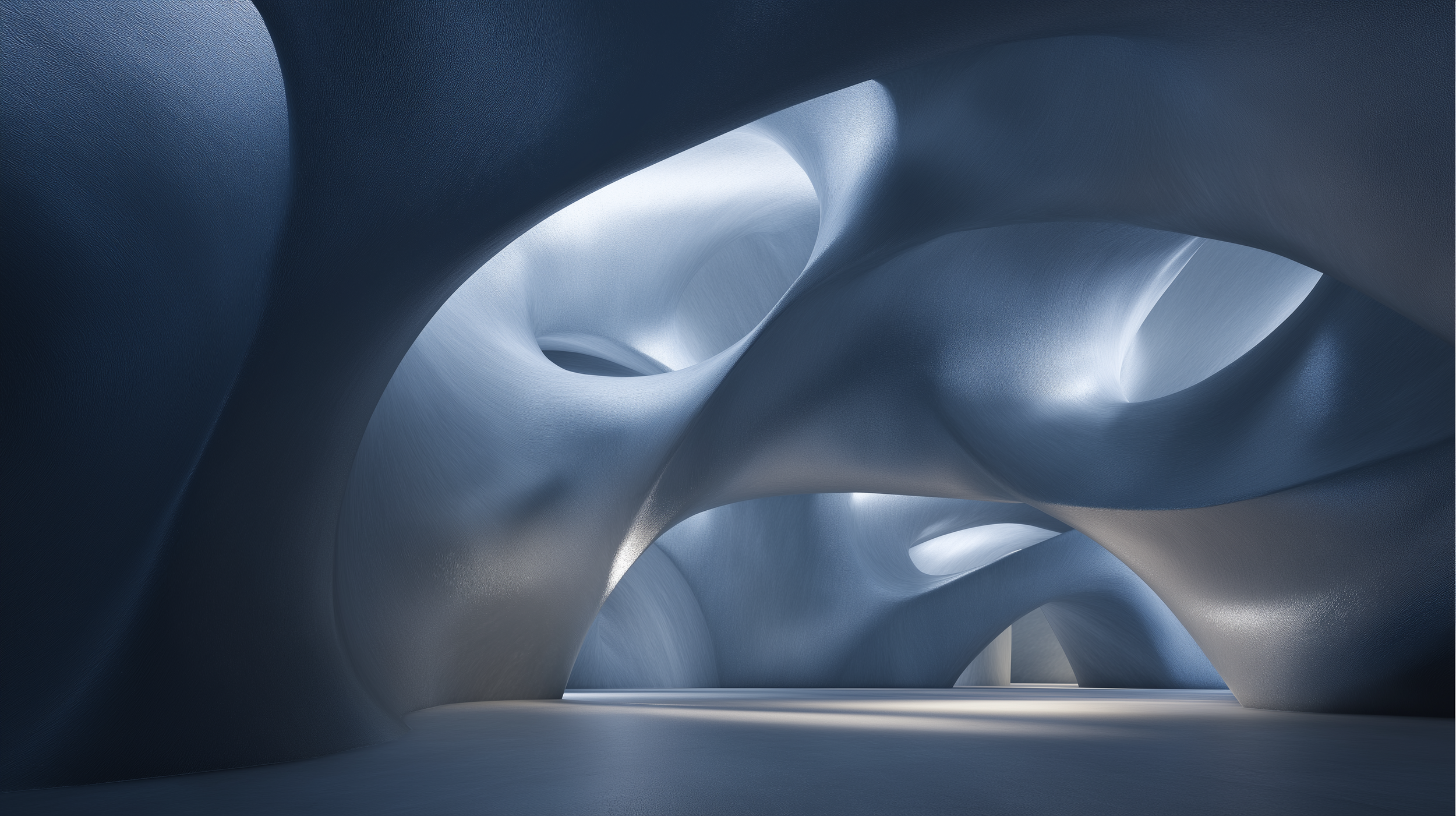
Why it matters
We live inside overstimulation.
Screens, noise, speed, visual saturation and constant cognitive demand keep the nervous system in a state of alert. Architecture can either intensify that load or help the body downshift.
Research in environmental psychology and neuroarchitecture supports the idea that spatial environments affect stress, attention and recovery. Roger Ulrich’s well-known 1984 study found that patients with views of nature recovered more positively after surgery than those facing a brick wall. Stephen Kaplan’s Attention Restoration Theory explains how natural environments can help restore directed attention after cognitive fatigue. ANFA — Academy of Neuroscience for Architecture — also promotes research connecting neuroscience with human responses to the built environment.
NEI translates this knowledge into design.
Not as clinical formula.
As architecture with emotional precision.
The NEI Principles
1. Nervous System First
Every project begins with the human state, not with the object.
What does the person need to feel?
Protected? Clear? Grounded? Expanded? Held? Released?
The spatial strategy starts from the body.
2. Space as Regulation
NEI treats architecture as a regulator of intensity.
A space can reduce exposure, slow movement, soften attention, frame light, contain sound and create a sense of orientation.
Calm is not emptiness.
Calm is regulated information.
3. Thresholds as Emotional Filters
The entrance is never just access.
A threshold marks the passage from one nervous state to another. Compression, shadow, material thickness and reduced visual noise prepare the body before entering the main space.
The threshold lowers intensity.
4. Nature as Co-Regulator
NEI uses nature not as decoration, but as biological memory.
Water, stone, earth, vegetation, lunar light, shadow, horizon and organic rhythm reconnect the body with slower systems. This connects with research on restorative environments and attention recovery through contact with natural settings.
5. Matter as Emotional Presence
Materials are chosen for what they transmit.
Stone can anchor.
Clay can soften.
Wood can warm.
Water can mirror.
Textile can hold.
Shadow can protect.
Material is not finish.
Material is atmosphere.
6. Light as Nervous Orientation
NEI avoids visual aggression.
Light is filtered, indirect, gradual and intentional. It guides the body through the space without overstimulating it.
Light becomes rhythm, not spectacle.
7. Immersion as Inner Experience
In NEI, immersion is not only technological.
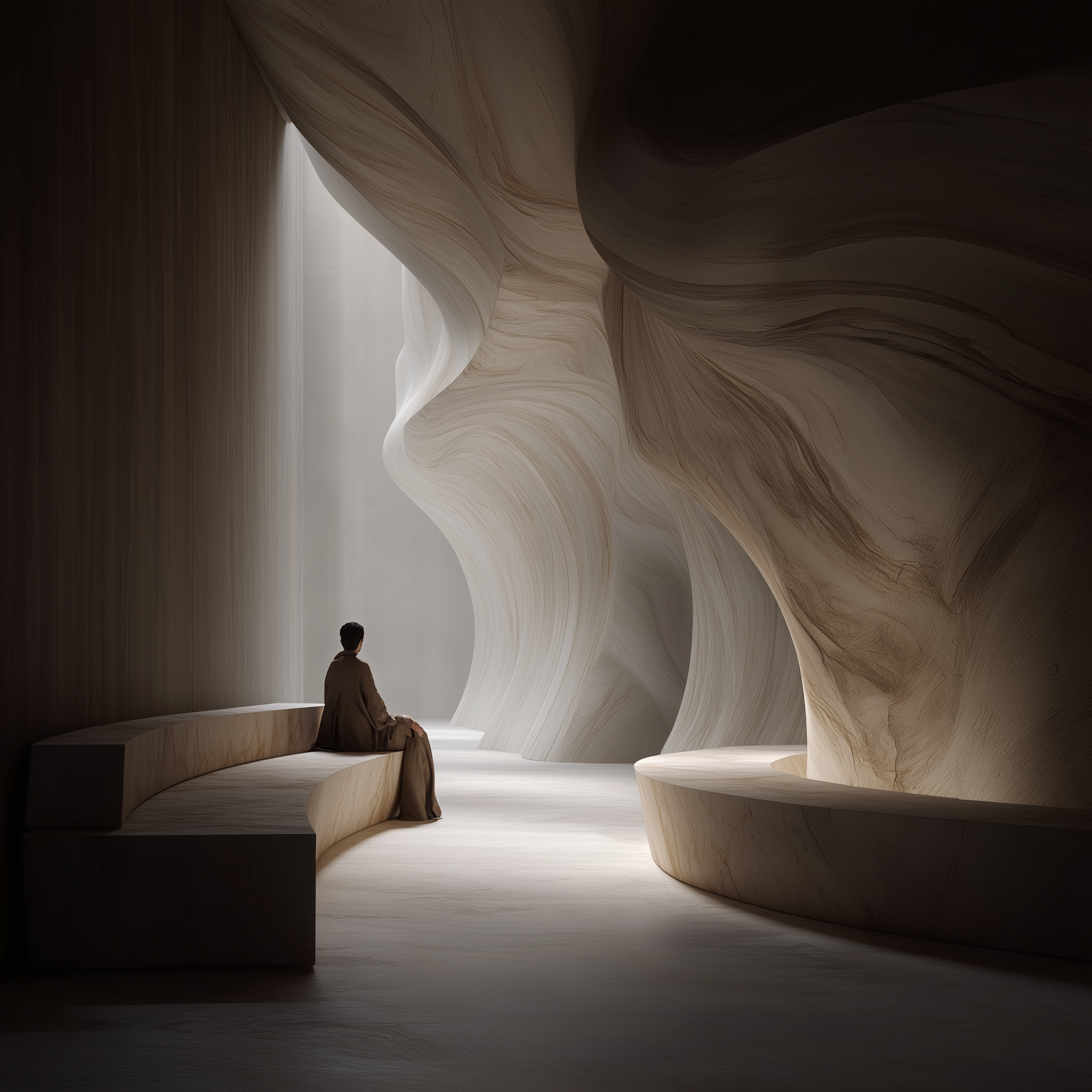
A person can feel immersed in silence, in a cave, in a courtyard, in a digital landscape or in a small room where everything finally slows down.
Immersion means presence.

The NEI Method
Phase 1 · Emotional Diagnosis
We define the emotional state the space must respond to.
Examples: mental noise, grief, transition, overstimulation, fatigue, disconnection, creative block, need for grounding.
Output: emotional brief + nervous system intention.
Phase 2 · Spatial Regulation Strategy
We translate the emotional diagnosis into architectural actions.
Reduce/Filter/Contain/Slow/Orient/Reconnect/Release.
Output: spatial sequence + regulatory principles.
Phase 3 · Sensory Architecture
We design the sensory field of the project.
Light/Sound/Texture/Temperature/Scale/Rhythm/Material/Movement/View.
Output: sensory map + atmosphere direction.
Phase 4 · Symbolic Narrative
Every NEI space has a deeper narrative.
The cave, the moon, the mountain, the threshold, the water, the womb, the refuge, the horizon. These are not aesthetic references; they are emotional archetypes that help the space communicate without words.
Output: narrative concept + symbolic language.
Phase 5 · Spatial Prototype
The project becomes visible through plans, sections, renders, AI studies, 3D models, VR scenes or immersive walkthroughs.
Output: architectural concept, visual research, spatial prototype or immersive environment.
Phase 6 · Emotional Validation
The final question is not only: does it look good?
The real question is:
What does this space do to the body?
Does it slow you down?
Does it help you breathe?
Does it reduce noise?
Does it create orientation?
Does it feel protective without becoming closed?
Does it reconnect you with yourself?
What NEI creates

Refuges for mental noise

Immersive sanctuaries
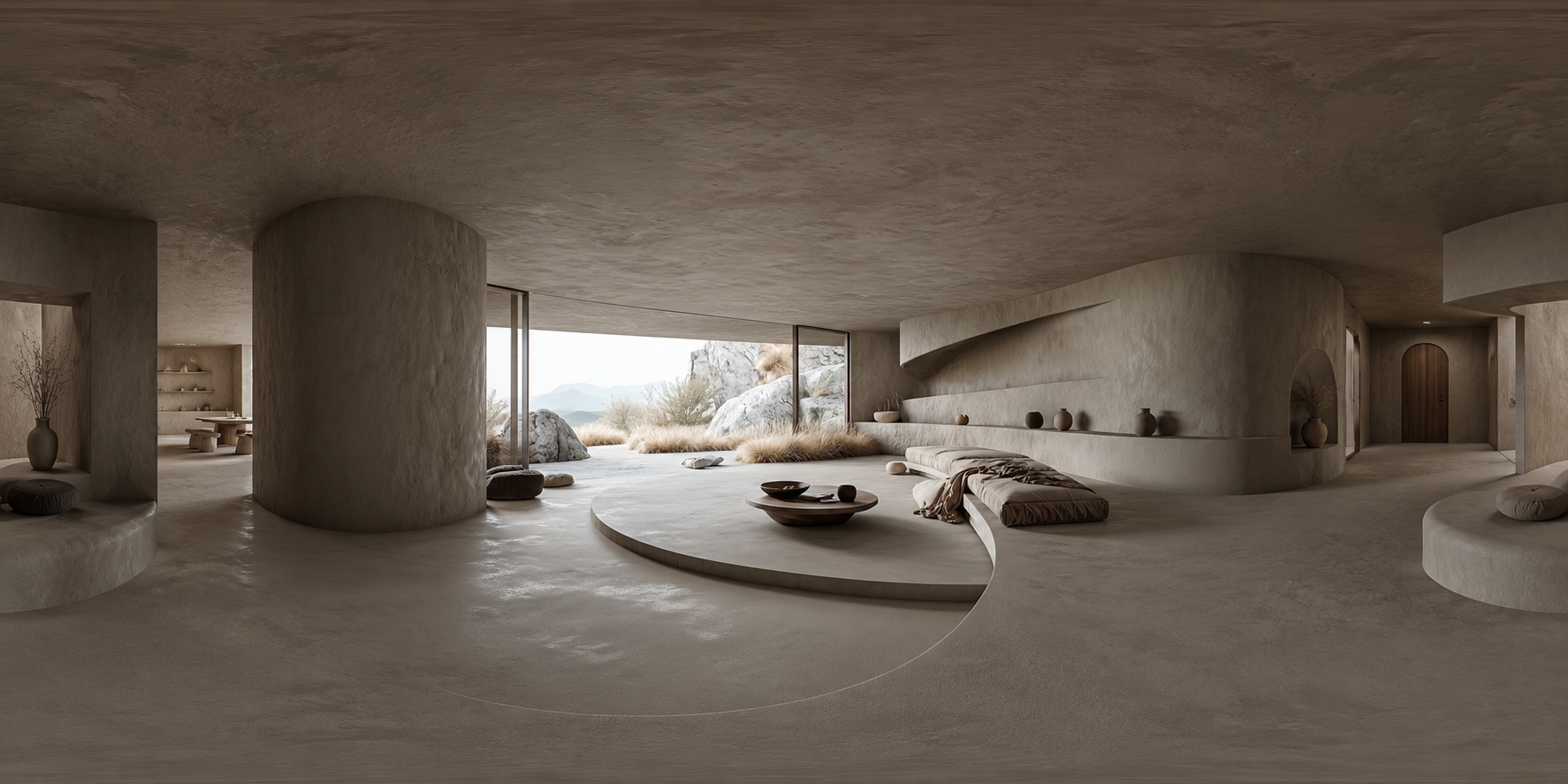
Digital architecture and VR experiences
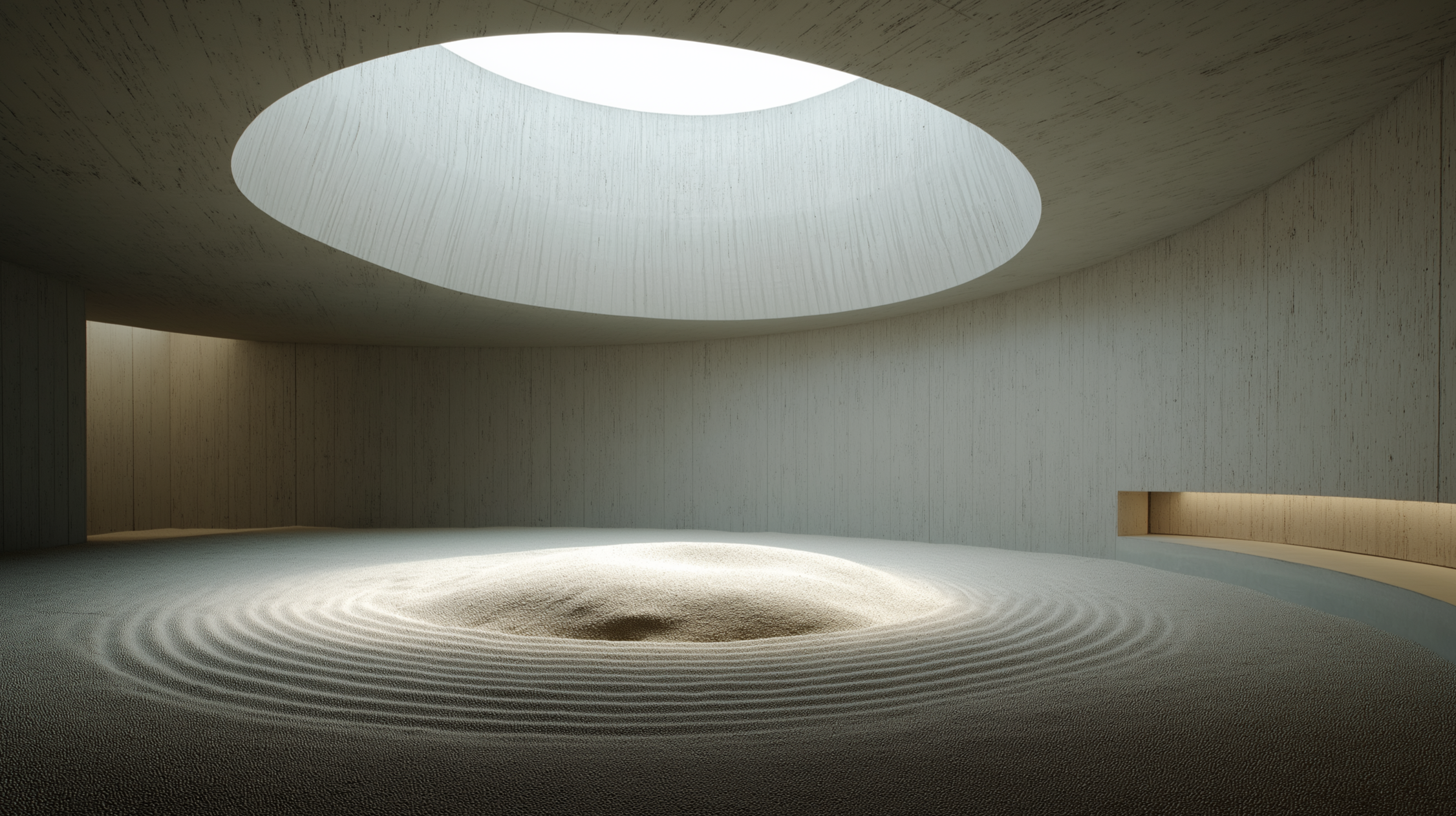
Neuro-spatial concepts for brands
Healing-oriented environments

Architectural research capsules
NEI is for
Studios, brands, institutions and individuals who understand that the future of design is not only visual.
It is sensory.
Emotional.
Embodied.
Regenerative.
Immersive.
NEI is for projects that need more than a beautiful space.
They need a spatial experience with intention.