
The Architecture Closest to the Body
By Lucía Silva
I have been thinking about the body as the first place where architecture happens.
Before we understand a space, the body has already received it. Light reaches the skin. Sound changes attention. Temperature alters posture. A surface supports, presses or keeps its distance. The body reads all of this before the mind finds language for it.
This is where Body as Terrain begins: not with an object placed onto a neutral figure, but with the body understood as a changing site. A terrain shaped by pressure, tension, movement, memory and time.
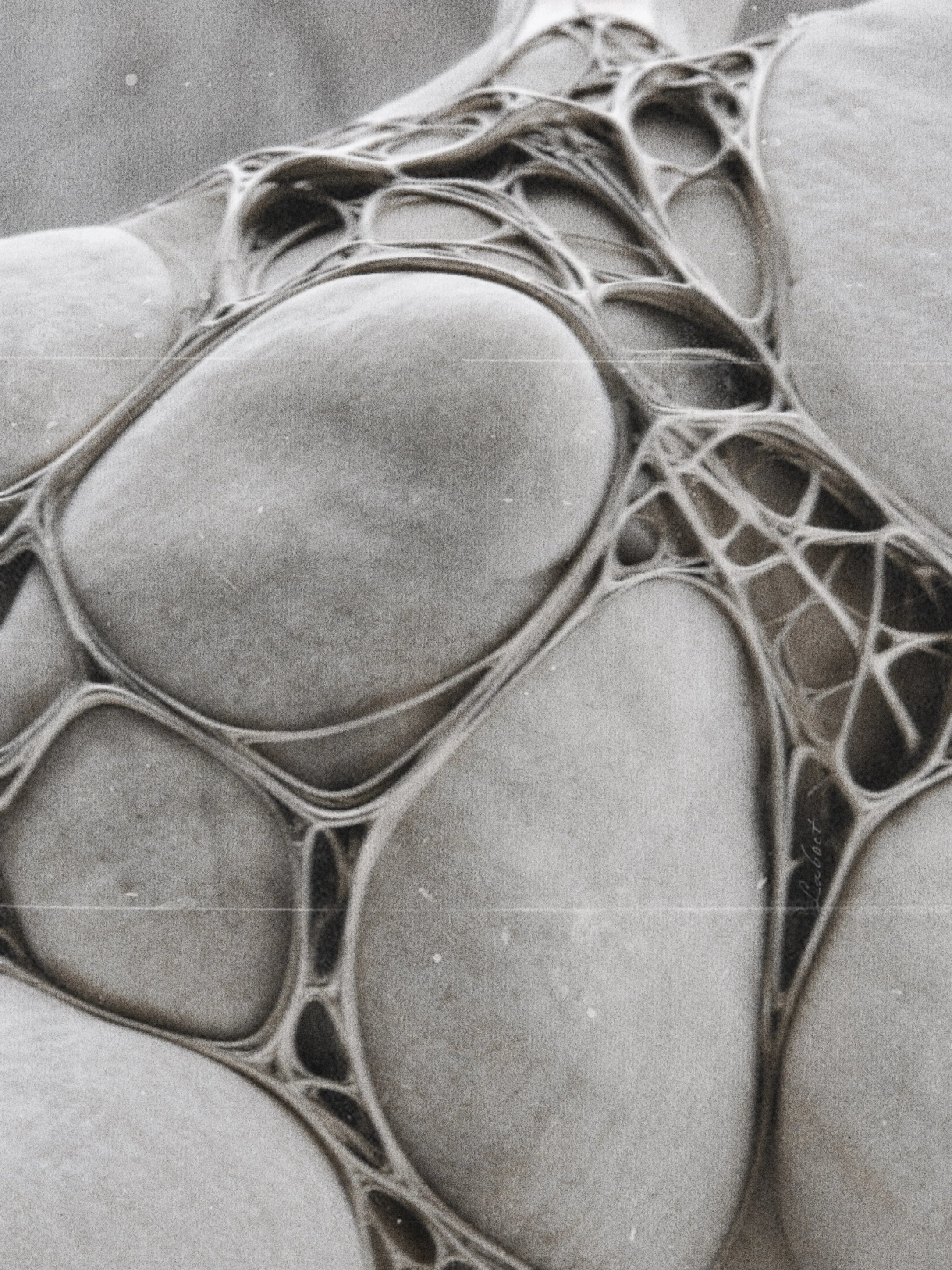
A speculative Body Fragment follows the changing topography of the body, alternating contact and release.
The body is not a surface
When the body is treated only as a surface, form arrives from the outside. It is designed first and adjusted later. The skin becomes a support for something already decided.
I want to reverse that order. Instead of asking what can be placed on the body, I begin by asking what the body is already doing. Where does it bend? Where does it resist? Where does it need space? Which areas can receive pressure, and which should remain open?
A body, like a landscape, is never still. It changes with breath, gravity, fatigue, movement and contact. Designing close to it requires attention to these small variations. Geometry cannot simply surround the body. It has to negotiate with it.
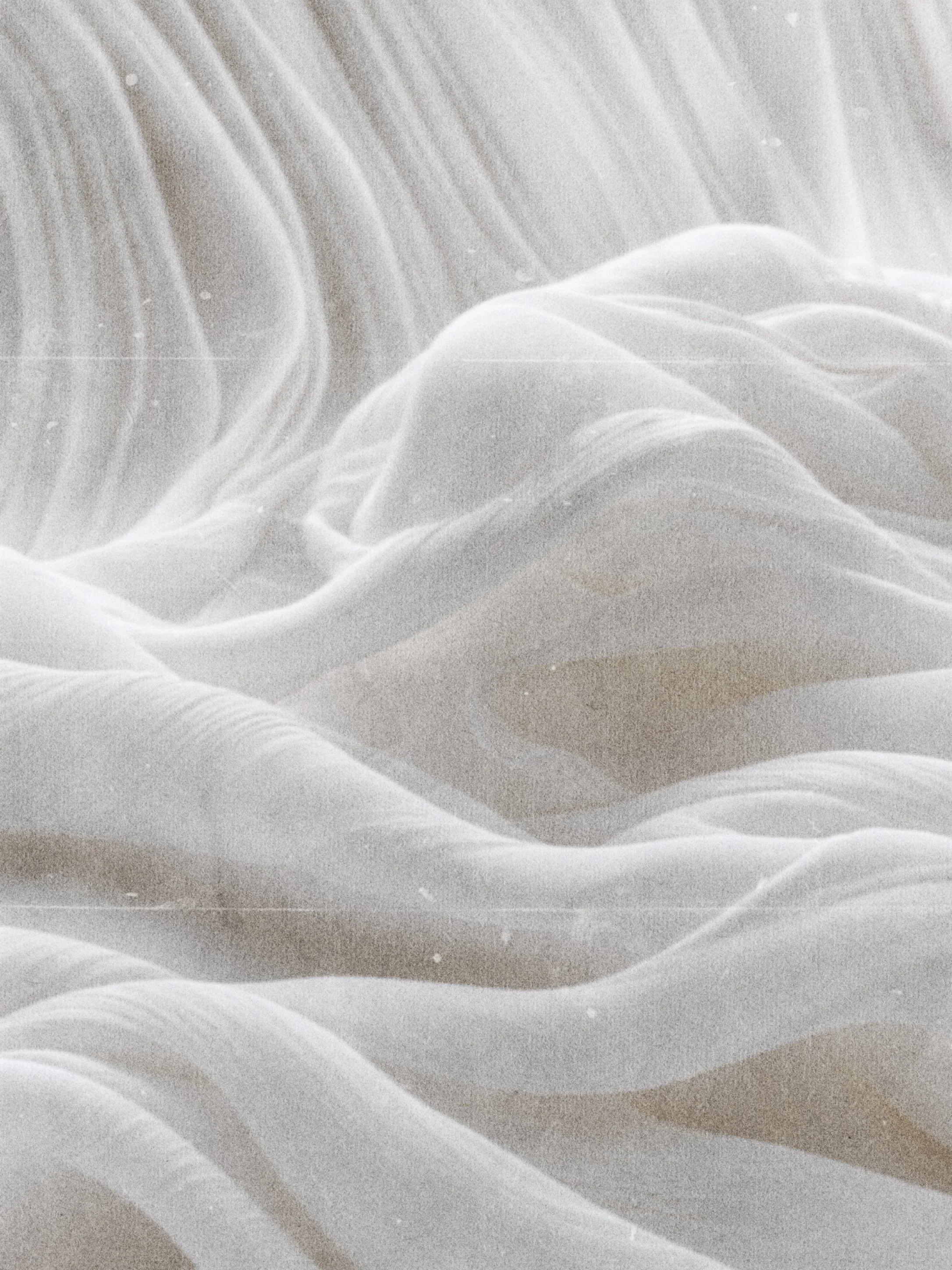
The body is read as terrain: pressure, fold, tension and change.
The skin as threshold
We tend to describe the skin as a clear boundary: the point where the body ends and the world begins. But experience makes that border less certain.
A cold current of air can enter the body as tension. A soft surface can extend a sense of support beyond the skin. Light can expose, dissolve or soften an edge. Proximity can feel protective in one moment and restrictive in another.
The skin is therefore not only a limit. It is a threshold: an active place of exchange between body and environment. At this scale, architecture becomes intimate. Structure becomes contact. Void becomes breath. Boundary becomes perception.
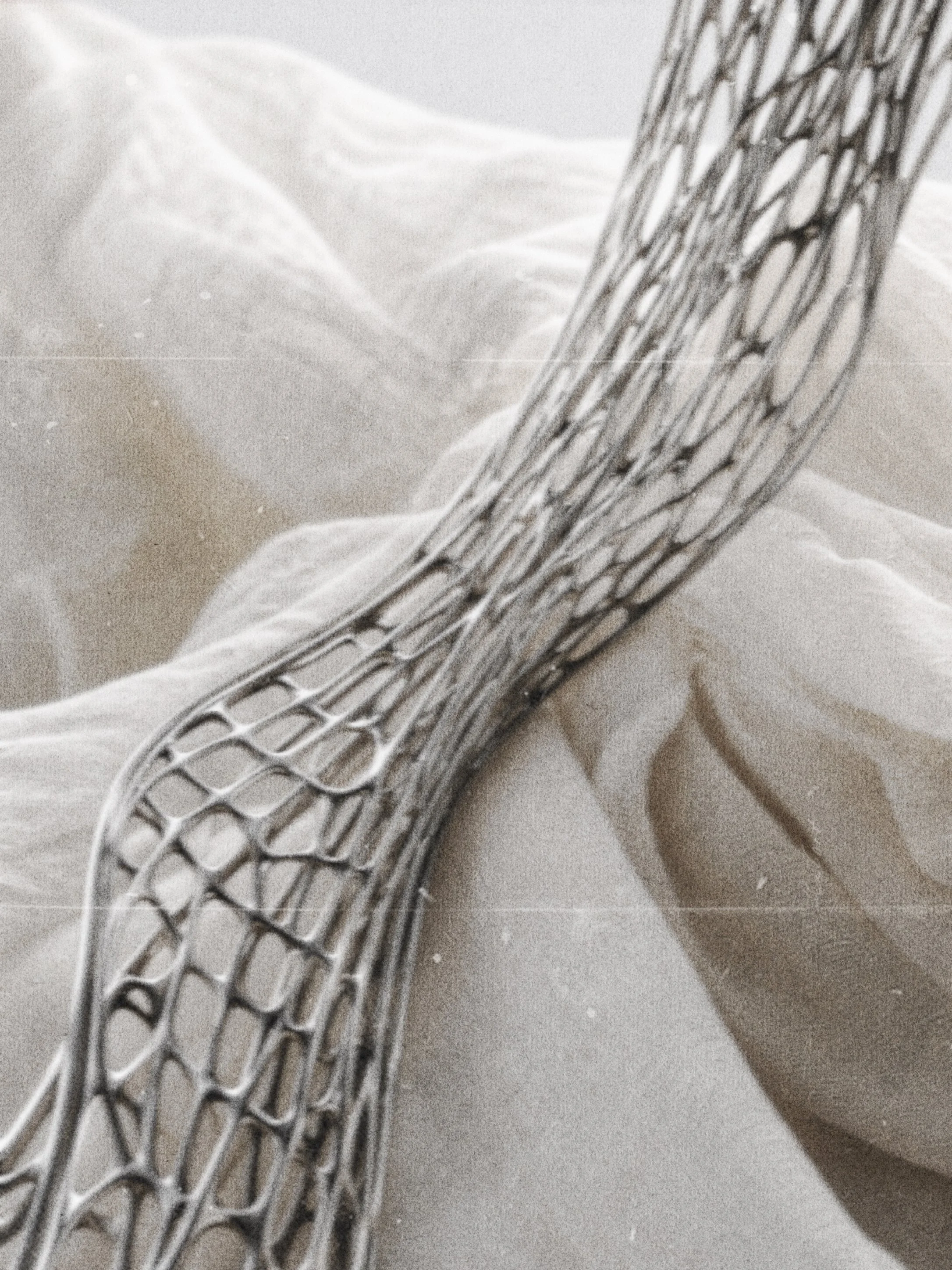
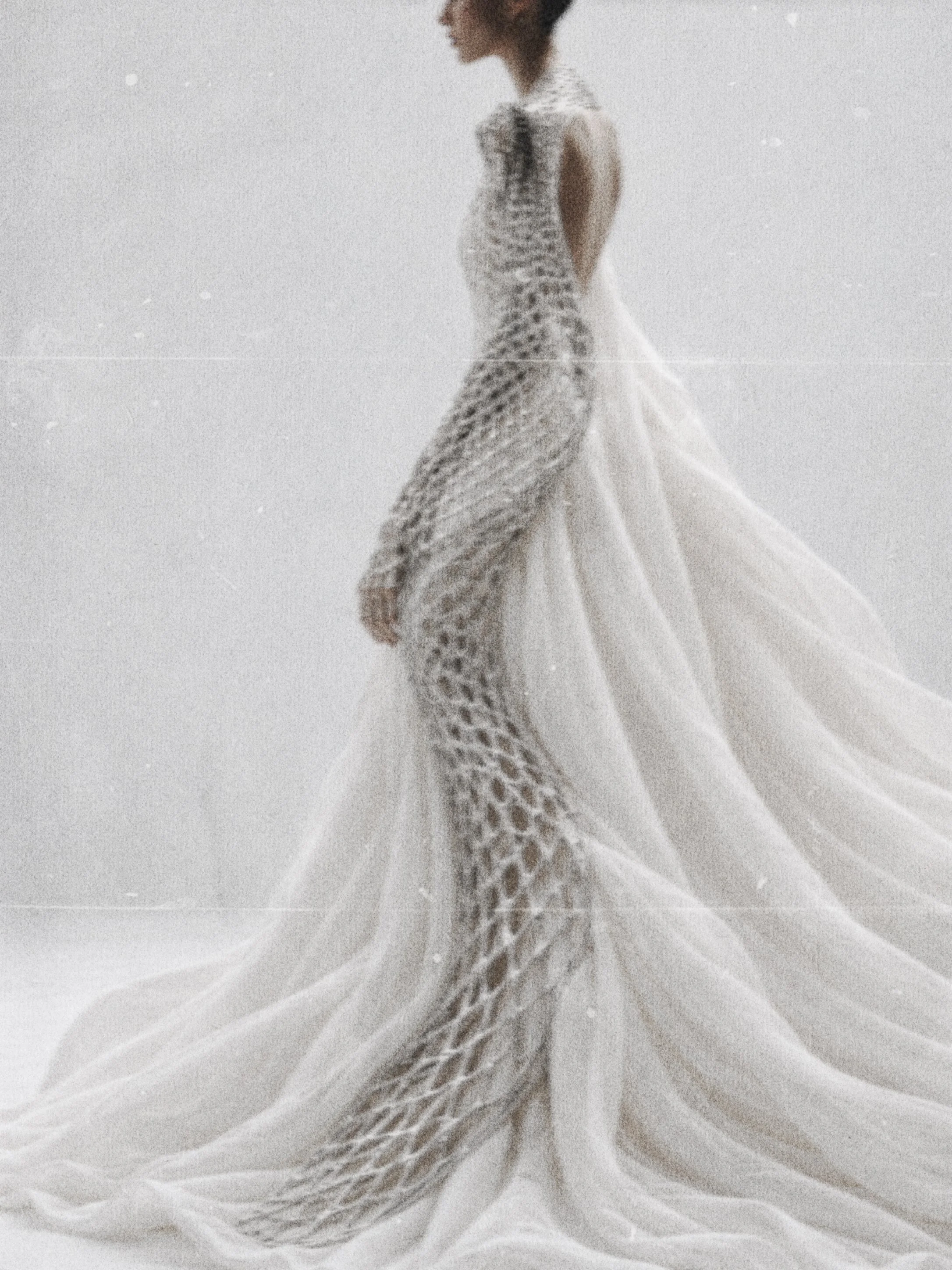
Structure does not cover the body evenly. It negotiates where to touch and where to release.
Protection without enclosure
Protection is often imagined as a closed shell: more thickness, more distance, less contact. I am interested in another possibility. Can a structure offer protection while remaining porous? Can it create a sense of boundary without isolating the body from what surrounds it?
Porosity is not simply a visual pattern. Its openings decide what passes through, what remains visible and how the body can move. Matter can touch one area, lift away from another and create a small atmosphere in between.
Sometimes protection comes from adding material. Sometimes it comes from deciding where matter should not exist.
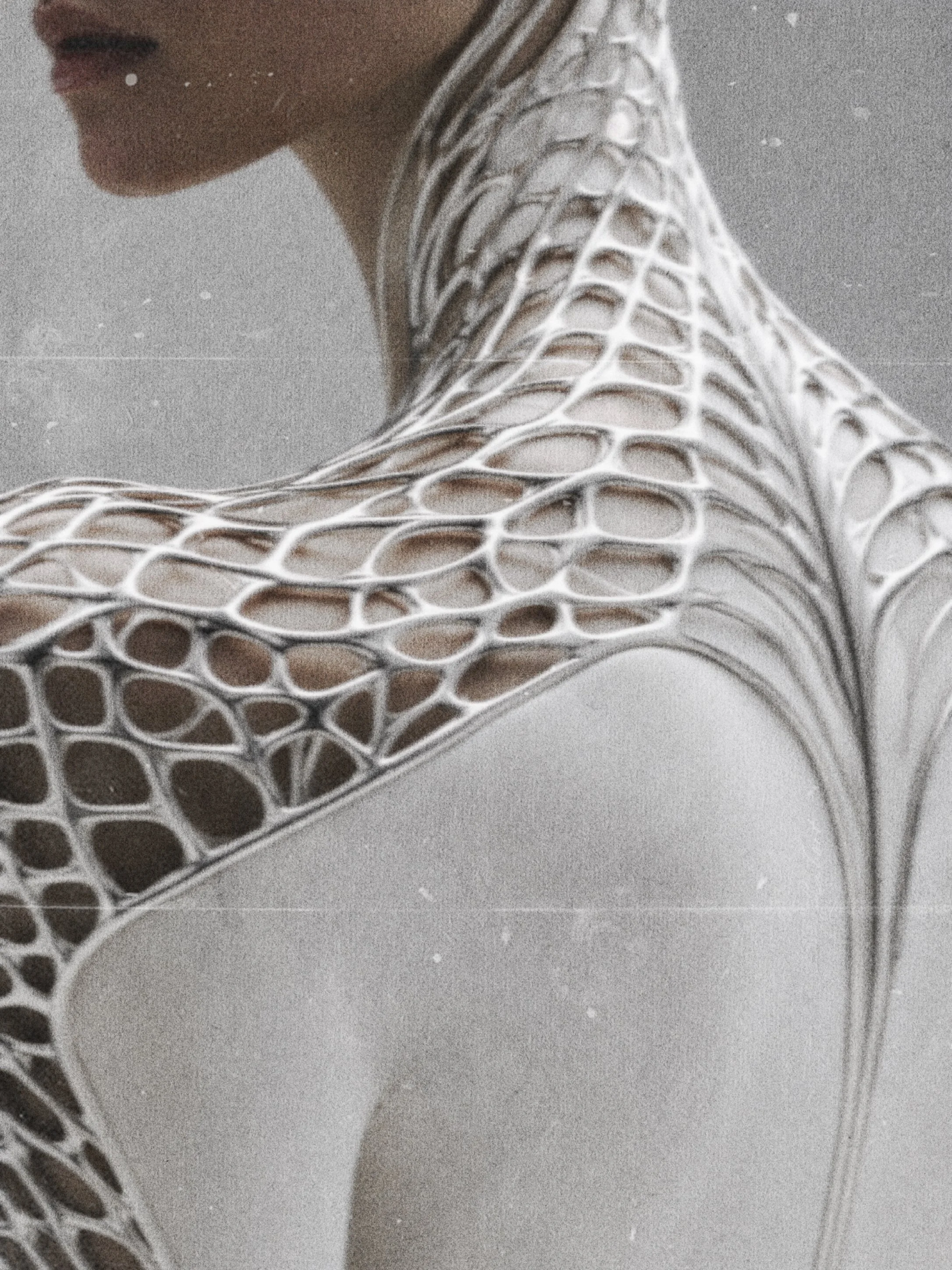
At the scale of the skin, boundary becomes contact, distance and perception.
From visual research to digital form
The images in this study are not finished pieces. They are AI-assisted visual explorations that I directed, selected and edited to test relationships between body, structure and space. They help me see possibilities before those possibilities become geometry.
I am now translating one direction into the first digital Body Fragment: a ring developed in Nomad Sculpt. This is not a move away from architecture and into jewellery as a separate discipline. I am bringing architecture closer, until its site is the body itself.
The scale changes, but the questions remain architectural. Where does the form make contact? Where should it lift away? What void allows the finger to move? How much structure is necessary before protection becomes restriction?
The digital model will not confirm the image. It will challenge it. Proportion, thickness, gravity, fabrication and the body will each answer back. The work begins to become credible when those answers are allowed to change the form.
Between wearable object and spatial fragment, the body becomes the site.
The architecture closest to the body
Body Fragments sit between body, object and space. They are not conventional jewellery, and they are not miniature buildings. They are spatial studies at the closest possible scale: small structures that alter contact, distance, exposure and movement around the body.
For LS•STUDIO, this scale belongs to the same practice as an object or a room. Each one asks how form, matter and atmosphere can filter the intensity of the world without removing the body from it.
The first ring is still being formed. Its value, at this stage, is not in pretending to be resolved. It lies in making the question physical enough to test.
