
The Space between Noise and Silence
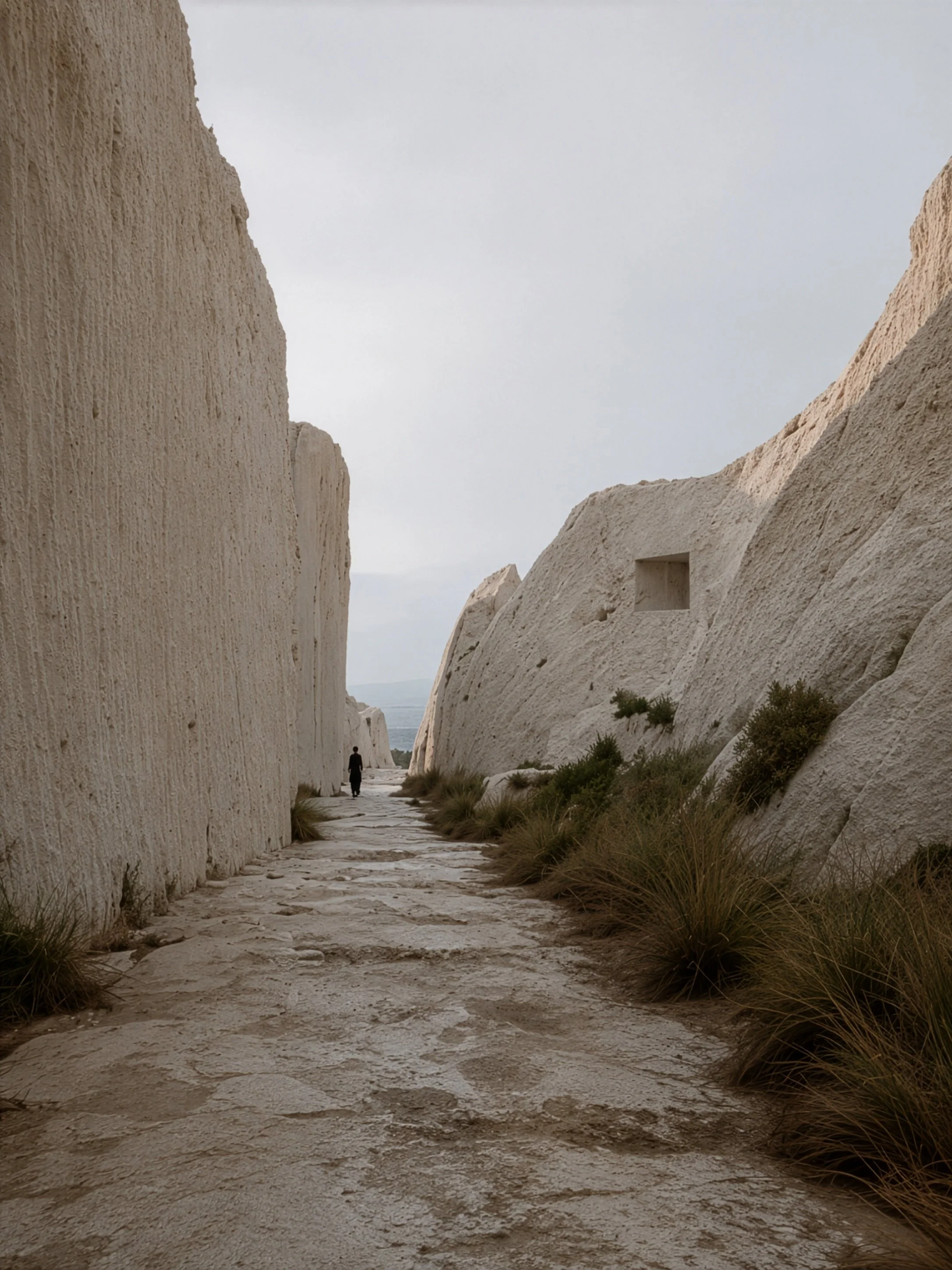
Can architecture regulate the nervous system before we consciously notice it?
We live surrounded by visual noise, constant stimulation and fragmented attention.
Most spaces increase this condition without realizing it.
Brighter. Faster. Louder. More exposed.
But what if architecture could operate differently?
Not as spectacle.
Not as distraction.
But as a spatial filter between the body and the intensity of the world.
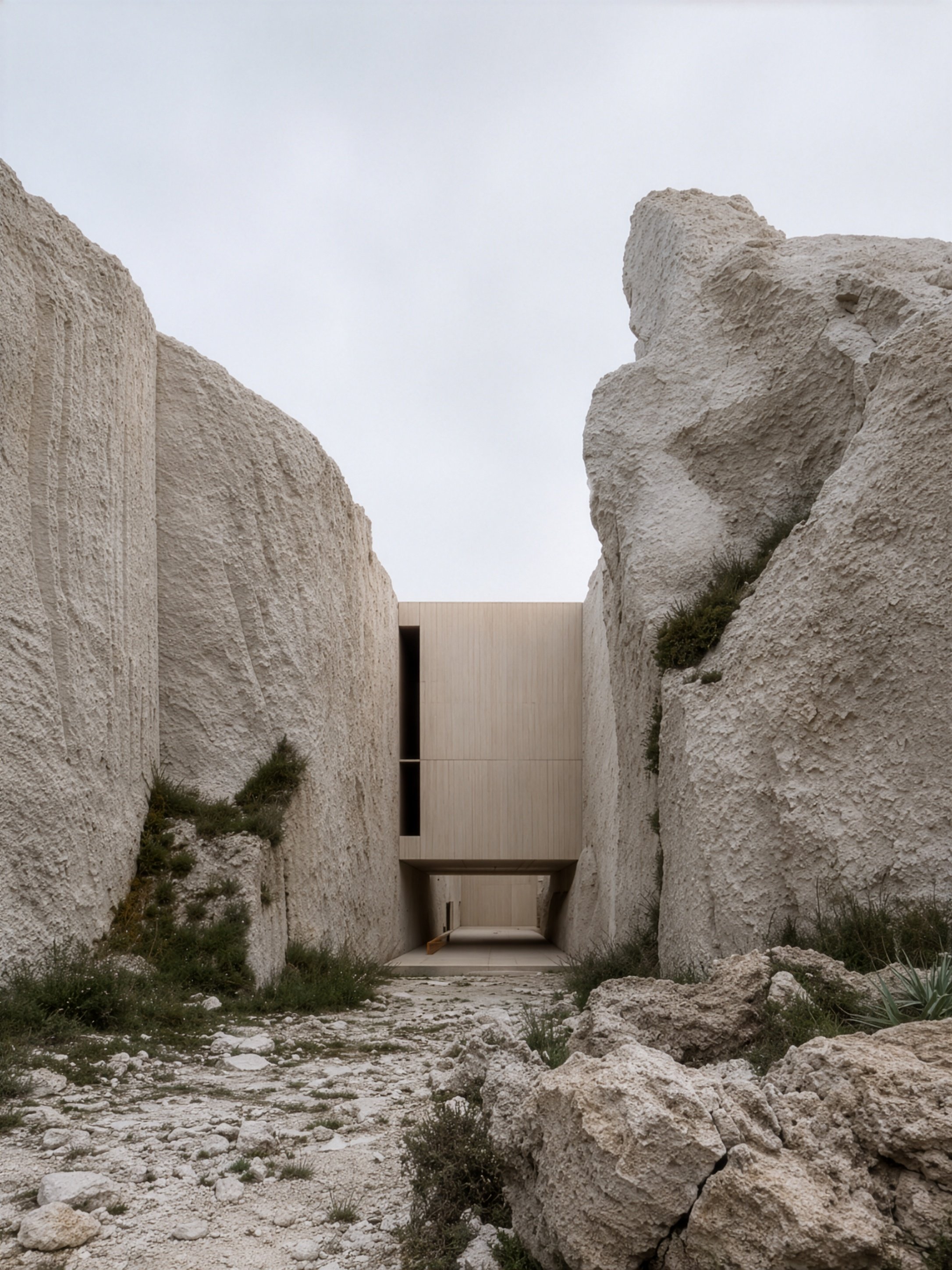
These conceptual studies explore neuro-regulating architecture through sequence, atmosphere, light and materiality.
Spaces designed to slow perception down.
Spaces where transition matters more than the object itself.
Spaces that do not isolate us from reality, but change the way we arrive into it.
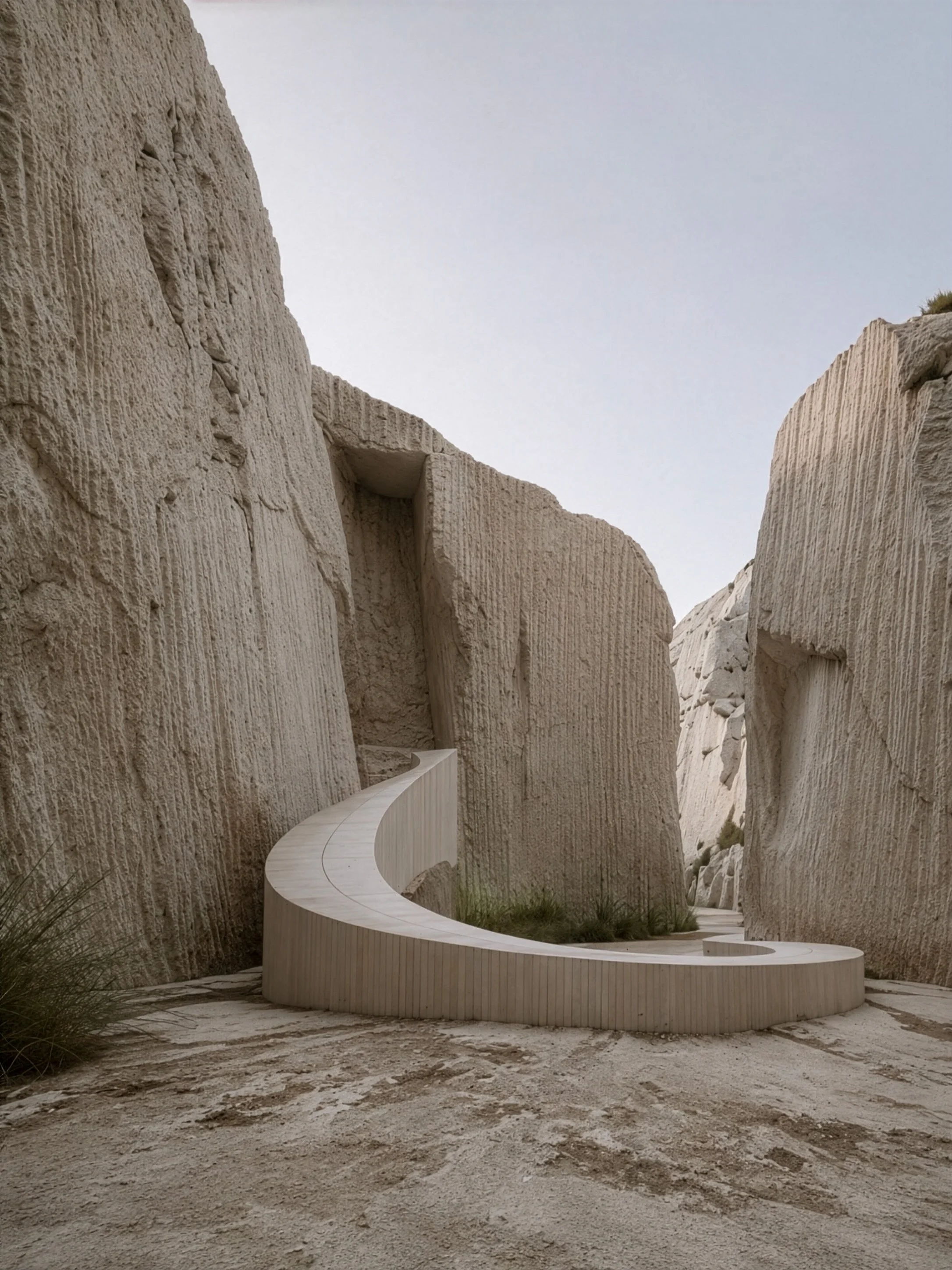
Architecture as Nervous System Choreography
Architecture is rarely experienced all at once.
The body reads space sequentially.
Through compression.
Release.
Shadow.
Scale.
Temperature.
Light.
This creates a spatial rhythm capable of influencing emotional and physiological states.
The sequence becomes more important than the final room.
A narrow passage can slow the breath.
A curved transition can soften anticipation.
A hidden threshold can reduce sensory exposure.
Architecture begins to act less like an object and more like a nervous system choreography.

Light as Regulation
Light affects the nervous system long before it becomes aesthetic.
Overexposure creates tension.
Uniform brightness removes depth and orientation.
Constant stimulation prevents the body from settling.
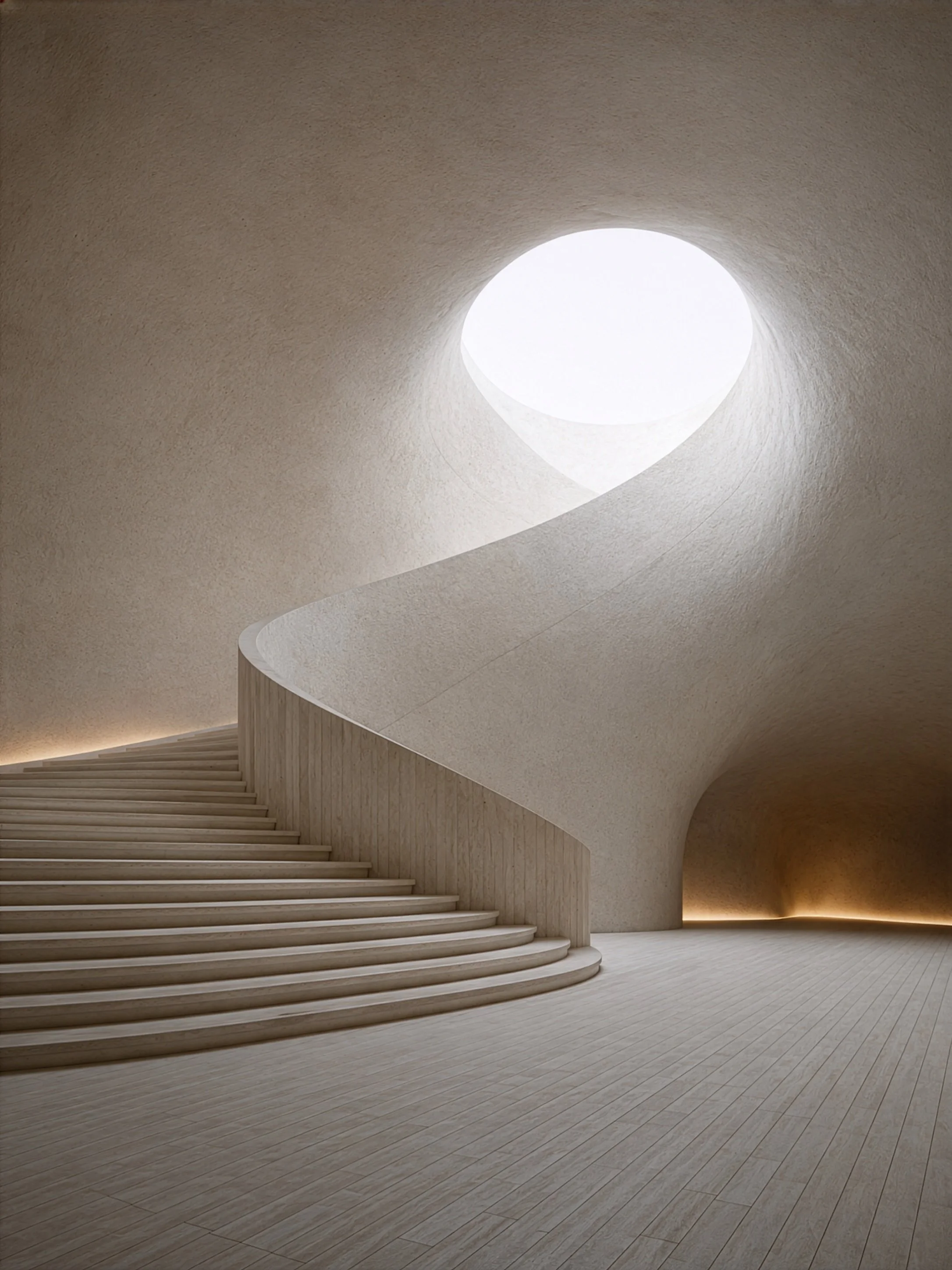
In neuro-regulating spaces, light becomes gradual.
Filtered light.
Indirect light.
Light that reveals slowly.
Openings are no longer only visual devices.
They become emotional calibrators.
The goal is not darkness.
The goal is controlled intensity.
The Neuro-Regulating Sequence
These studies explore architecture as a progression of nervous system states:
Exposure
Threshold
Compression
Reorientation
Quiet
Return
The exterior landscape remains present, but its intensity changes through spatial filtering.
Instead of disconnecting from the world, the body reconnects to it differently.
More slowly.
More consciously.
With less internal friction.
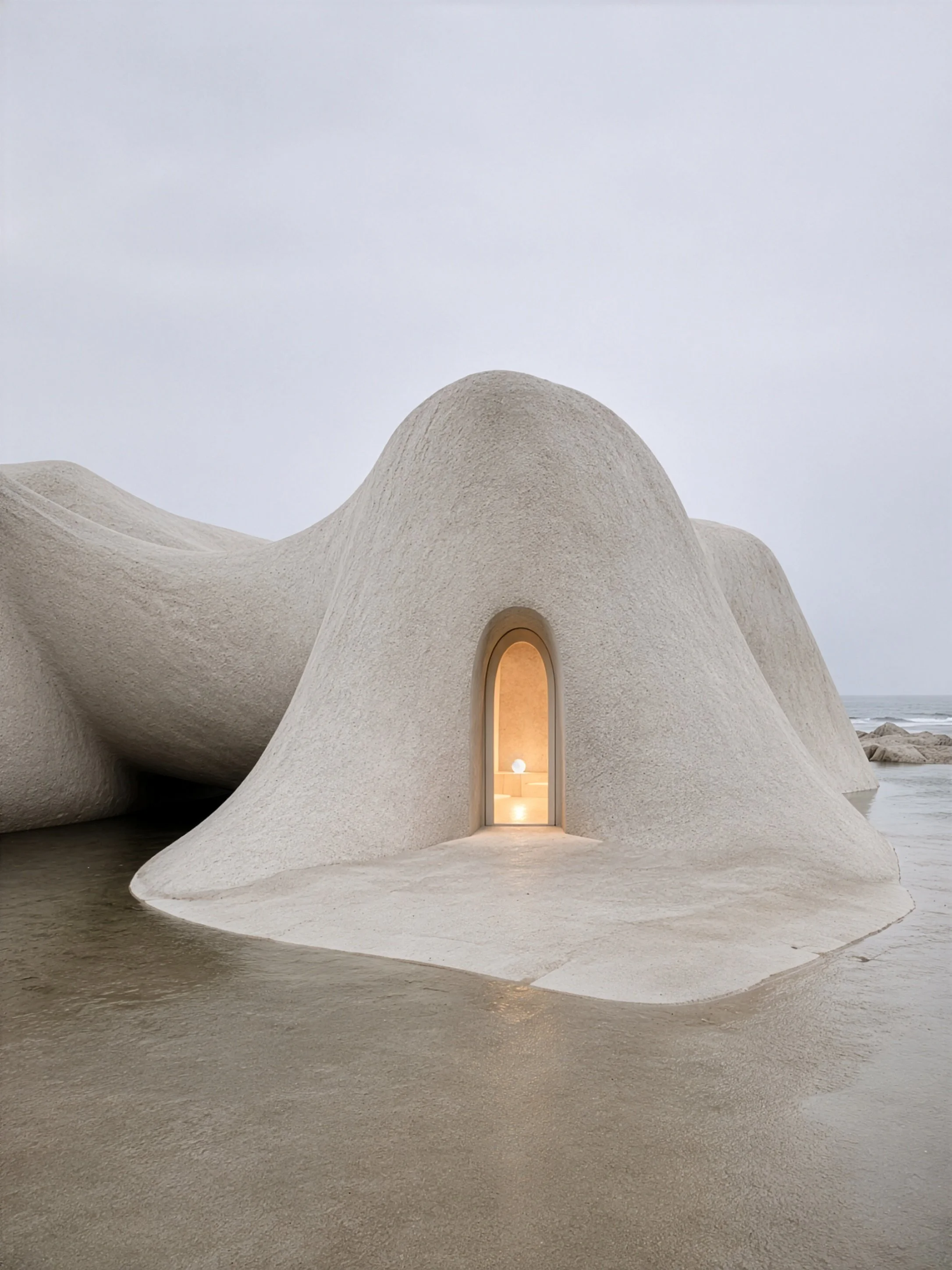
A Refuge Is Not Escape
A refuge is often misunderstood as isolation.
But perhaps the future of calming architecture is not about escaping reality.
Perhaps it is about creating spaces capable of reducing unnecessary intensity while preserving emotional presence.
Silence is not emptiness.
Calm is regulated information.
The future of architecture may not be louder, smarter or more technological.
It may simply understand the nervous system better.
LS•STUDIO
Neuro-Regulating Spatial Research
NEI — Neuro Emotional Immersion
