

What Are
Neuro-Regulating Refuges?
Spaces designed for overstimulated bodies.
A Neuro-Regulating Refuge is a physical or digital environment designed to reduce sensory overload, soften perception and support emotional regulation through architecture, light, matter and atmosphere.
It is not a calm-looking space.
It is a spatial condition designed for the body.
Spatial Principles
How a refuge is designed
Every neuro-regulating refuge is designed through spatial principles that guide the body from exposure to calm.
Threshold
A transition that prepares the body to enter another state.
Filtered Light
Soft, indirect or controlled light that reduces visual intensity.
Matter
Mineral, tactile and natural surfaces that create grounding and presence.
Sequence
A spatial journey from approach to stillness and return.
Orientation
Clear spatial reading that reduces cognitive overload and helps the body understand where it is.
Silence
Reduction of visual and acoustic noise so attention can return inward.
Protection
A spatial condition that allows the body to feel held without being isolated.
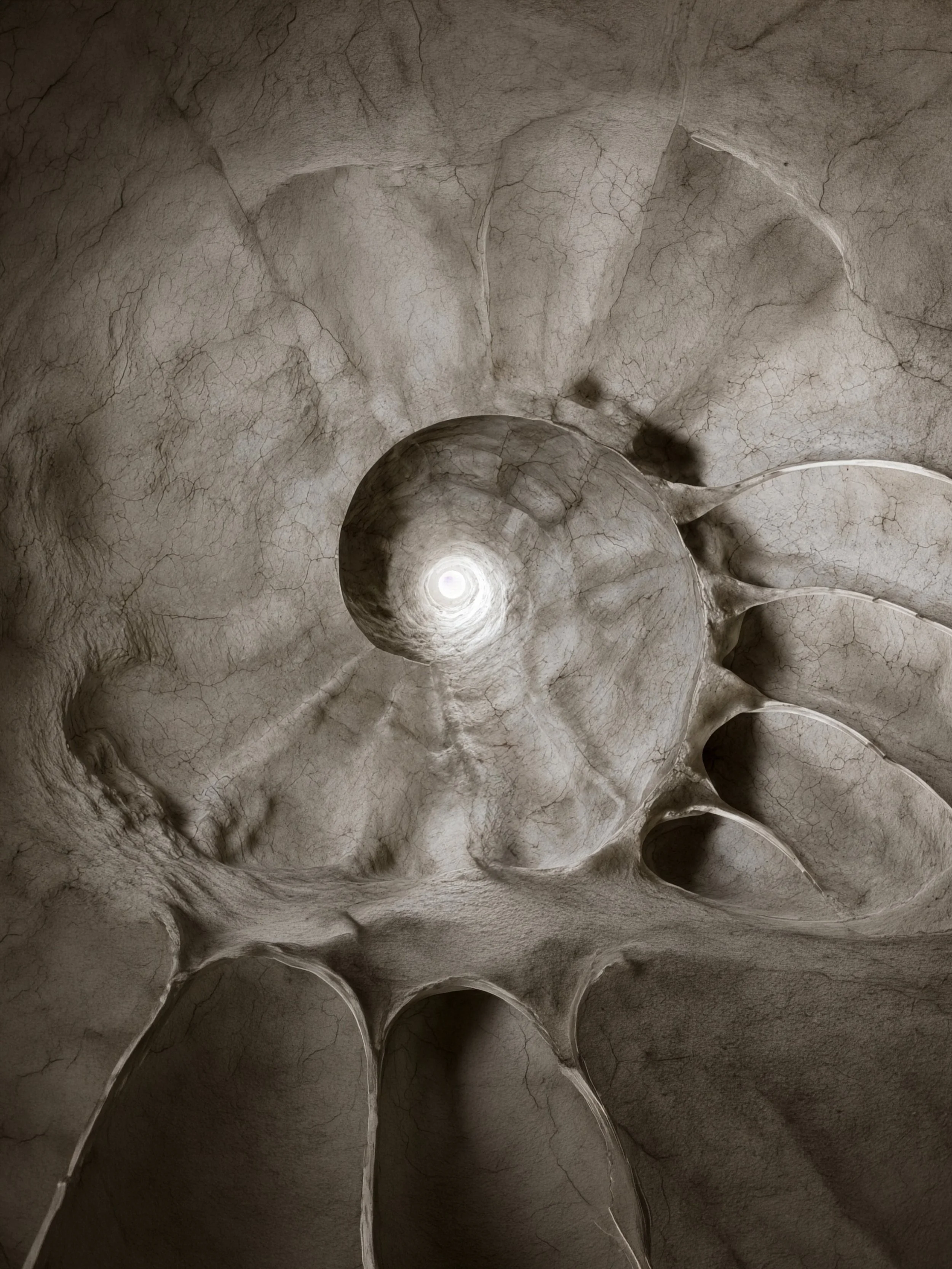
Designed through NEI
At LS•STUDIO, neuro-regulating refuges are developed through NEI — Neuro Emotional Immersion.
NEI begins with a human state: overstimulation, mental noise, emotional fatigue, disconnection or the need for silence.
From there, the state is translated into spatial decisions: threshold, light, matter, proportion, sequence and atmosphere.
The aim is not to design a beautiful room.
The aim is to design a calmer relationship between the body and the space around it.
Who are they for?
Neuro-Regulating Refuges can be developed for private interiors, wellness spaces, hospitality concepts, healthcare environments, immersive experiences or digital sanctuaries.
They are intended for people, brands and environments seeking more sensitive ways to respond to overstimulation, fatigue and the need for calm.